
A generation that understands technology and manages it with confidence
At Gökkuşağı Schools, informatics and coding education goes beyond writing code. While learning to build software, our students grasp as a whole the foundations of computer science, digital literacy and how to use technology safely and ethically.
More than writing code
Informatics and coding education is a comprehensive programme aimed at learning the foundations of technology and developing programming skills. But our goal goes beyond teaching coding as a single skill; our students also grasp how computers and the internet work, how data is processed and how technology affects society.
At Gökkuşağı Schools our students learn to build software in languages such as Python, Java and C++, while experiencing alongside it the foundations of data science and artificial intelligence, cyber security, and safe and ethical conduct in the digital world.
Our aim is for your child to be an individual who does not merely use technology, but understands it, questions it, manages it with confidence and creates with it.
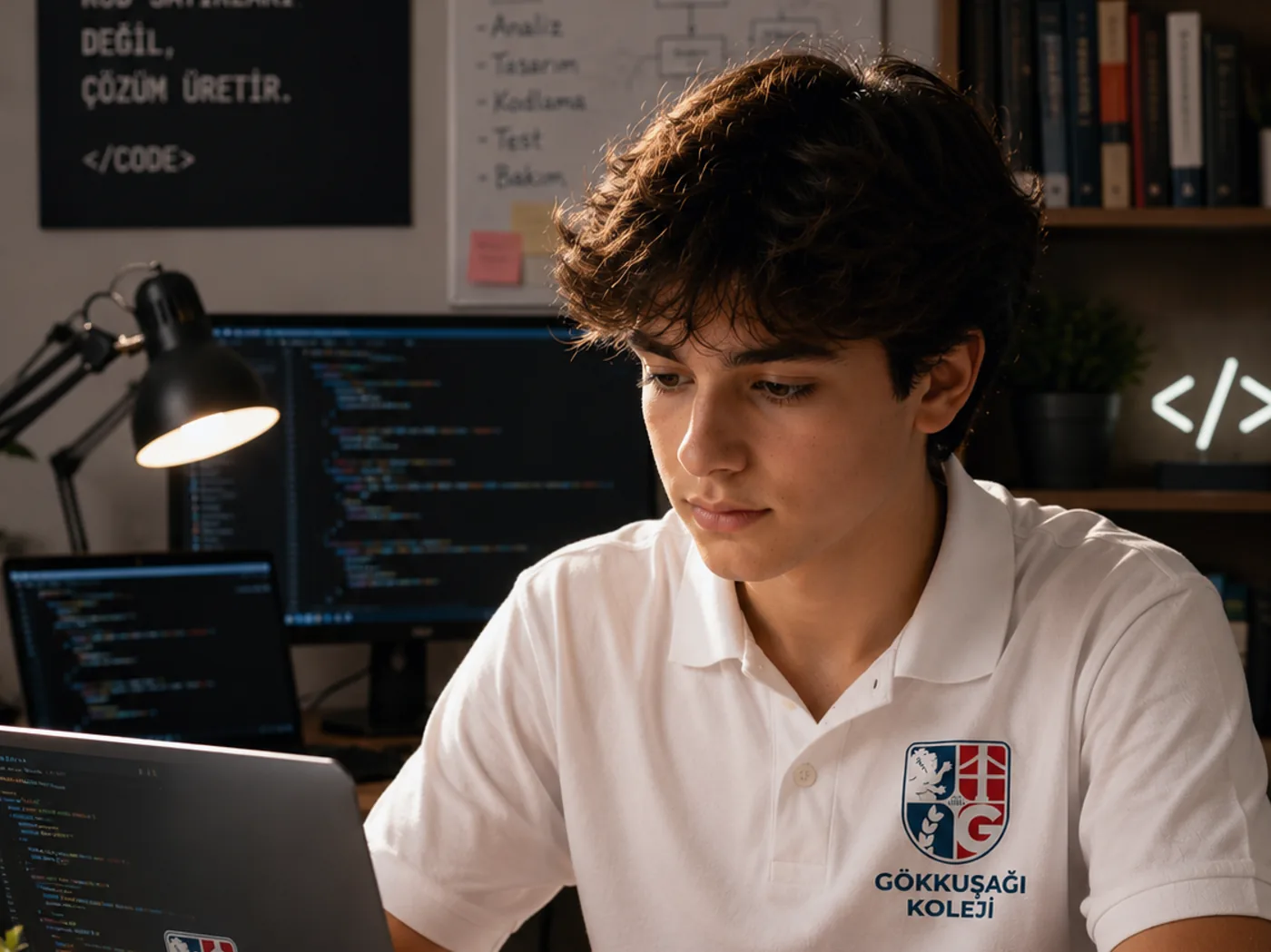
Individuals ready for the digital age
Technological competence, analytical thinking, creativity and preparation for the professions of the future; the four foundations that informatics and coding give our students.
- I
Technological Competence
The student grasps digital tools in depth rather than superficially, becoming an individual who commands technology and uses it effectively.
- II
Analytical Thinking
Coding develops the ability to analyse problems and produce systematic solutions, strengthening logical thinking.
- III
Creativity and Innovation
The student builds their own projects with programming languages, turning original ideas into working software.
- IV
Preparation for the Professions of the Future
It builds a solid foundation for future professions such as software engineering, data science and cyber security.
A broad view of the digital world
- 0Digital competence areas · DigComp
- 0Core programming languages · Python, Java, C++
- 0Digital citizenship topics
- #0WEF 2025: the fastest-growing skill, AI and data
Digital competence across five areas
We address digital competences across five core areas, following the DigComp framework developed by the European Commission and recognised worldwide.
Information & Data Literacy
Finding accurate information, critically evaluating sources and managing data.
Communication & Collaboration
Effective, respectful and safe communication and collaboration with digital tools.
Digital Content Creation
Producing and editing digital content such as text, images and software.
Safety
Protecting devices, personal data, privacy and digital wellbeing.
Problem Solving
Identifying needs and solving problems using technology.
From digital foundations to software
A solid, age-appropriate progression reaching from the foundations of digital literacy to advanced software, data science and artificial intelligence.
- Primary · Ages 7-10
Primary
The foundations of digital literacy and block-based coding. Safe internet habits are formed at an early age.
Digital foundations · block coding - Lower Secondary · Ages 10-14
Lower Secondary
An introduction to software with Python and the concepts of computer science. A sense of digital citizenship develops.
Python · digital citizenship - High School · Ages 14-16
High School
Advanced software with Java and C++; application and site development with web technologies (HTML, CSS, JavaScript).
Advanced software · web - High School · Ages 16 and over
High School
The foundations of data science and artificial intelligence, together with cyber security. Strong preparation for university and the professions of the future.
Data & AI · cyber security
Using technology safely and responsibly
Our informatics education teaches not only how to create, but how to stay safe. Our students become aware of matters such as the protection of personal data, the digital footprint, safe internet use, media literacy and coping with cyberbullying.
In an age when artificial intelligence has entered every area of life, our students learn what AI is, how it works and how to use it ethically. Our aim is to raise a generation that is not passive before technology, but conscious, critical and responsible.
Informatics and coding questions answered
STEM and Robotics focuses more on robotics and the design of physical systems. Informatics and Coding centres on software creation, computer science, digital literacy, cyber security and AI literacy. The two programmes complement each other.
We follow a path by age: block-based coding in primary school, Python in lower secondary, and Java and C++ together with web technologies (HTML, CSS, JavaScript) in high school. At the advanced level we move on to the foundations of data science and artificial intelligence.
Yes. Our digital citizenship education covers the protection of personal data, the digital footprint, safe internet use, media literacy and coping with cyberbullying. Your child learns to use technology safely and responsibly.
Yes. Our students learn what artificial intelligence is, how it works at a basic level and how to use it ethically; they gain the ability to evaluate AI outputs with a critical eye.
No. The education starts from the very basics, suited to each child’s age and level. We progress with simple, enjoyable projects and increase the difficulty gradually, in line with the student’s development.
Informatics and coding education is delivered at all eight Gökkuşağı Schools campuses.
Let’s plan your child’s digital journey together
Fill out the form and our advisors will call you about our informatics and coding programme, its content and the admissions process. The programme is delivered at all our campuses.
Explore our educational approach up close.
Alongside informatics and coding, explore STEM and robotics and our international programmes too.