International School in Izmir: A Guide for Expat Families
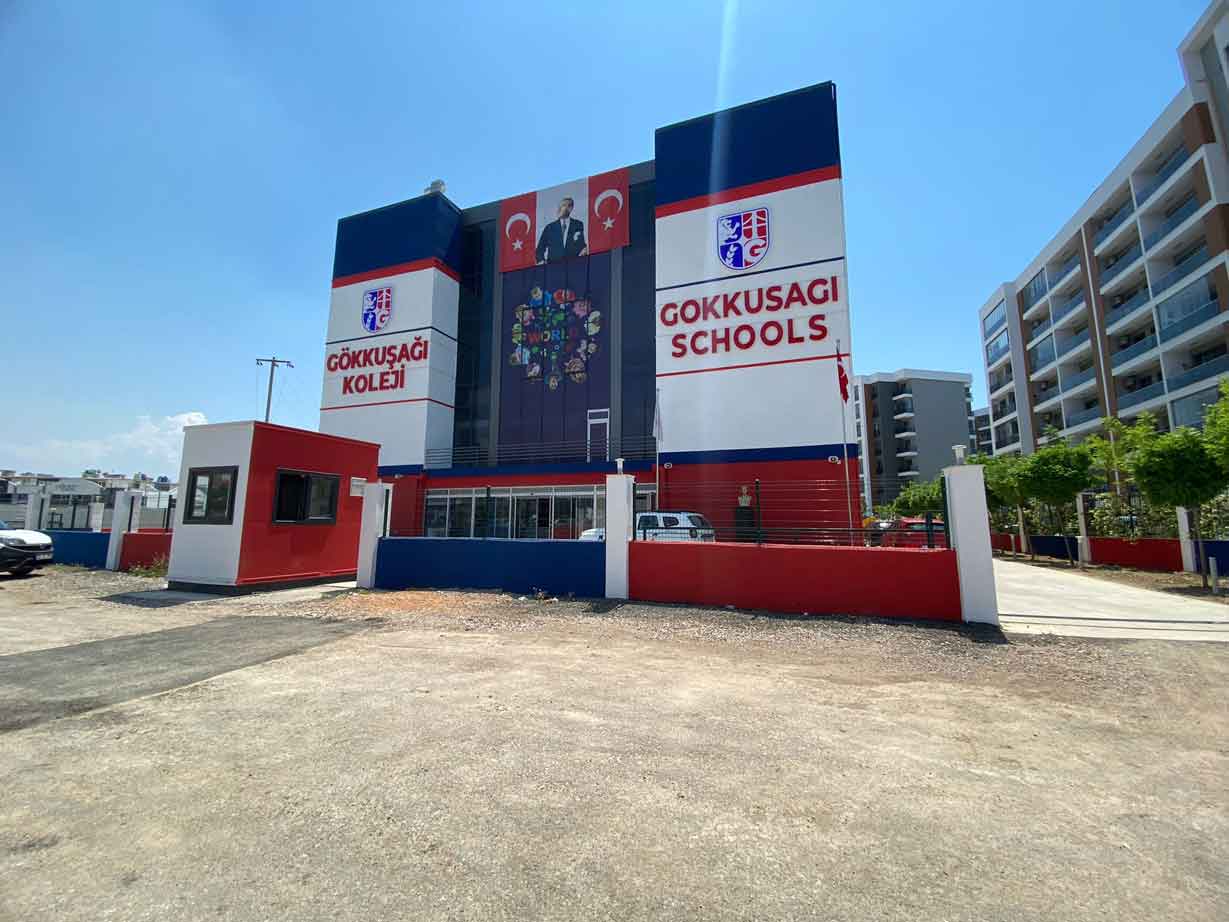
Looking for an international school in Izmir? The legal difference between school types in Türkiye, Cambridge (TR213) at the Çiğli campus, IB availability, enrolment and Turkish support.
Searching for an international school in Izmir leads to two different kinds of school: international schools that only foreign nationals may attend, and private schools under Türkiye’s Ministry of National Education (MEB) that add international programmes to the Turkish curriculum. Gökkuşağı Schools’ Izmir Çiğli campus is the second kind: a registered Cambridge International School with centre code TR213. There is no IB programme at this campus, and we say so up front.
This guide is for international families moving to or living in Izmir. It covers school types, the programme at our Çiğli campus, enrolment, how a child who does not speak Turkish gets started, and the school calendar. Information is current for the 2026-2027 school year, as of November 2026.
What does “international school” mean in Izmir?
In Türkiye, “international school” covers two legally different types. The Private Education Institutions Law No. 5580 defines international private schools as schools that only foreign nationals may attend. The second type are private schools under MEB: they follow the Turkish curriculum, add international programmes such as Cambridge or IB, and teach Turkish and international pupils together in the same classes.
The two models lead to different places. In a school for foreign nationals, a child stays inside one foreign system. In a private school with international programmes, the route to a Turkish high-school diploma stays open, international exams are taken alongside it, and children grow up with Turkish classmates. Gökkuşağı belongs to this second group. We explain the difference in more detail in choosing an international school in Turkey, and we introduce the campus itself on our Izmir Çiğli campus page.
Which international programme does the Izmir Çiğli campus offer?
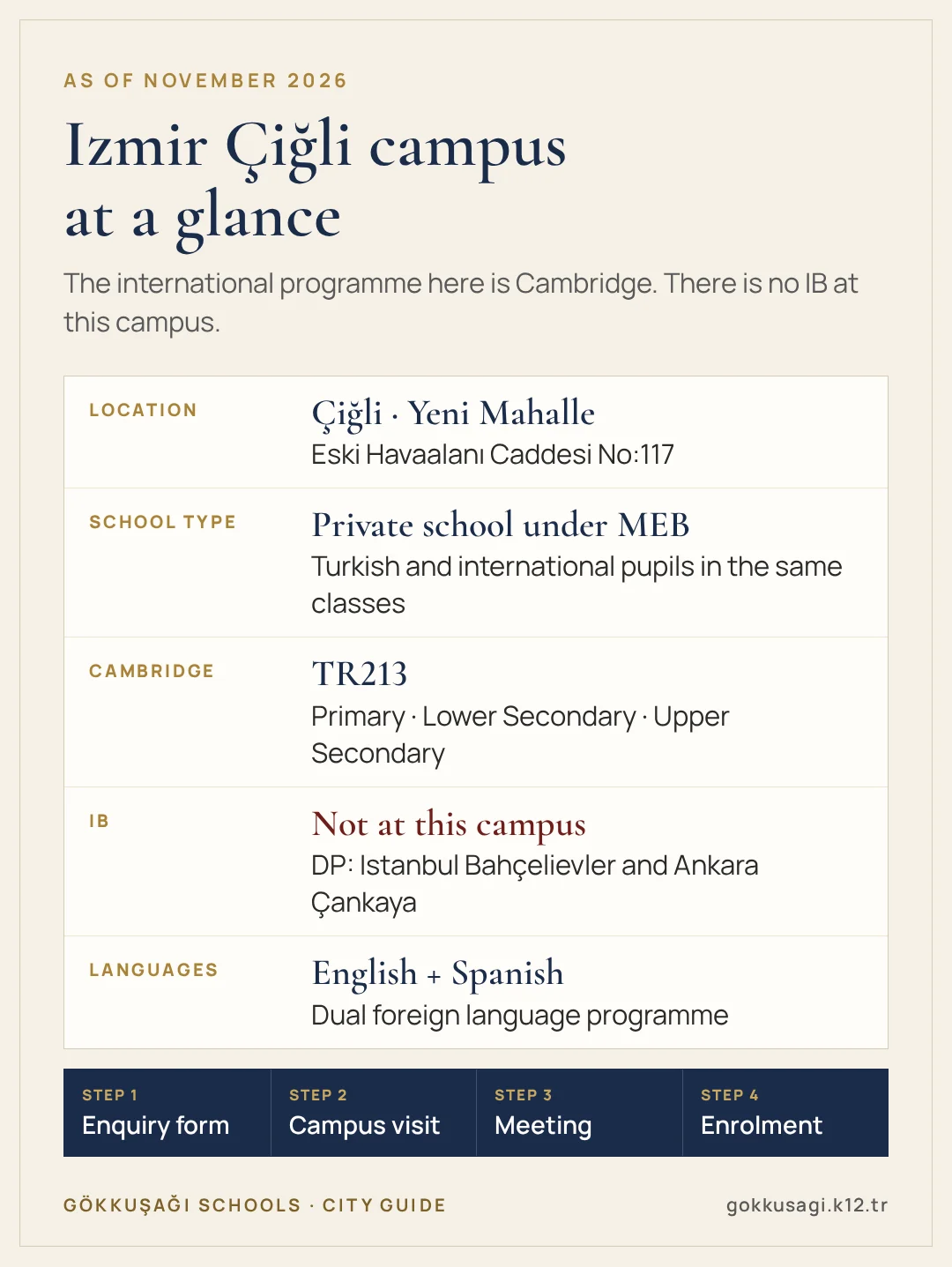
The international programme at the Izmir Çiğli campus is Cambridge International. The campus is registered as a Cambridge International School with centre code TR213 and is authorised for Cambridge Primary, Cambridge Lower Secondary and Cambridge Upper Secondary. Cambridge exams are taken on campus and marked in the United Kingdom, so a pupil’s level is shown on an international scale as well as on the Turkish report card.
Cambridge runs alongside the MEB curriculum, not instead of it. The Cambridge pathway consists of Cambridge Primary at primary level, Lower Secondary with Checkpoint assessments at middle-school level, and Upper Secondary (IGCSE) at high-school level. Verification is simple: entering TR213 in Cambridge International’s “Find a Cambridge school” search shows the programmes the campus is authorised for, and the Cambridge International and Cambridge Primary certificates are linked on our campus page. How Cambridge works in Turkish schools is covered in our guide to Cambridge International schools in Turkey.
For languages, the school runs a dual foreign language programme: English is the first foreign language and Spanish the second. The targets by the end of middle school are CEFR B1–B2 in English and A2 in Spanish.
Is there an IB programme at the Izmir campus?
No. Gökkuşağı’s Izmir Çiğli campus does not offer IB programmes; its international programme is Cambridge. At Gökkuşağı, the IB Diploma Programme runs only at the Istanbul Bahçelievler and Ankara Çankaya campuses, and the IB Primary Years Programme (PYP) at the Istanbul Ataşehir, Bahçelievler and Bahçeşehir campuses. No Gökkuşağı campus offers the MYP.
We state this plainly because IB authorisation is given to a campus, not to a brand, and a school group’s authorisation in one city does not extend to another. Families for whom IB is a firm requirement can see the authorised schools in Izmir in the IB’s official “Find an IB World School” directory. If you are weighing the two curricula, our article IB or Cambridge? puts them side by side.
Where is the Çiğli campus, and how do children get there?
The campus is in northern Izmir, in Yeni Mahalle in the Çiğli district, at Eski Havaalanı Caddesi No:117. The school bus network covers Çiğli, Karşıyaka, Bostanlı and Mavişehir; routes and times are planned by address at the admissions meeting. Meals are cooked daily in the campus kitchen under a dietitian’s supervision. Door-to-door time in morning traffic is a better guide than distance on a map.
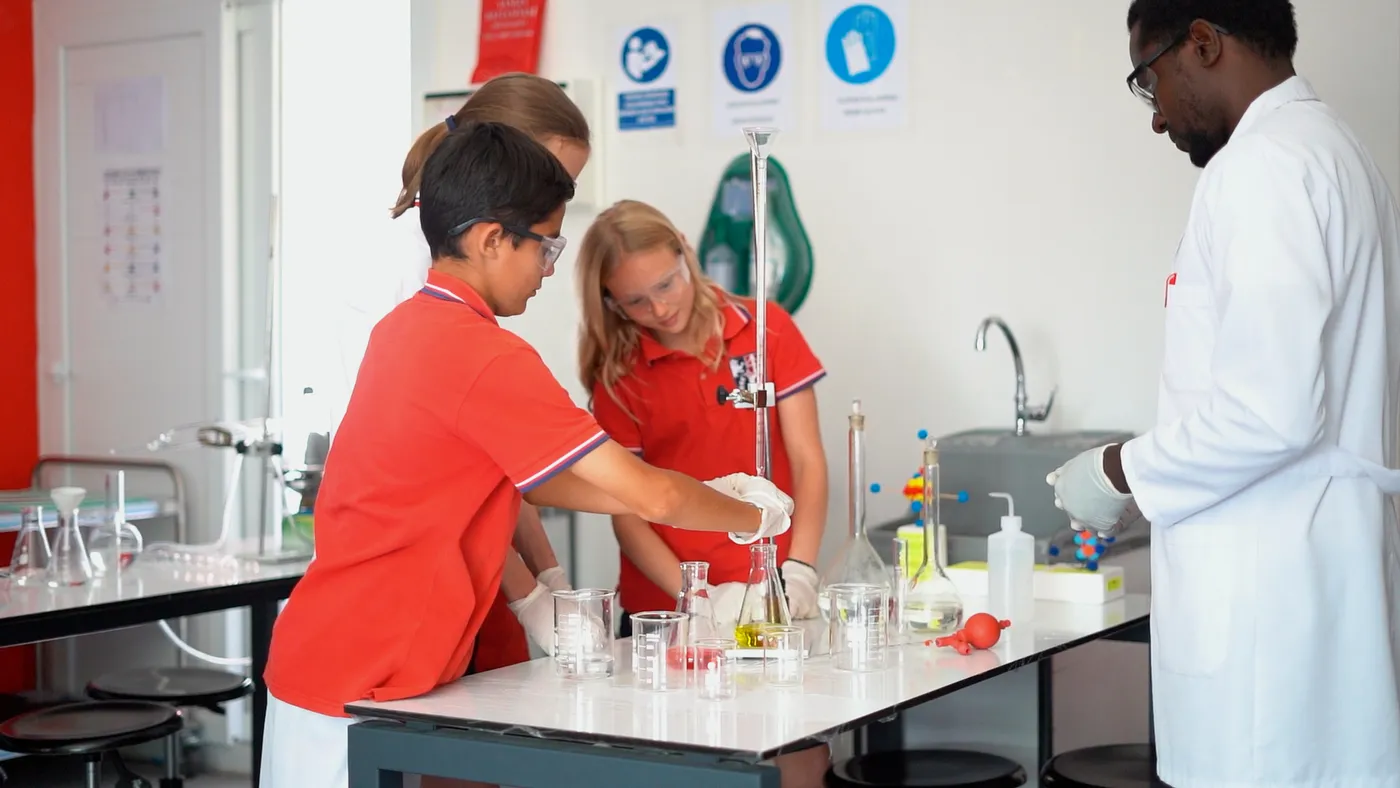
The campus has more than 15 workshops, laboratories and special spaces: physics, chemistry, biology and science laboratories, an IT lab, STEM and thinking-skills workshops, a visual arts workshop, a music and dance academy, a life skills workshop, archery, a kickboxing and fitness studio, an indoor sports hall, a conference hall and a library. It is a member of the Global Schools Program of the UN Sustainable Development Solutions Network. More on the neighbourhood and transport is in our guide to a private school in Çiğli.
How does a foreign child enrol in a school in Izmir?
International students can enrol in MEB private schools. Enrolment uses a passport and residence permit, through the foreign identity number starting with 99 that comes with the permit. School years completed abroad are recognised through an equivalency (denklik) decision. On the school side, the route is the information request form, a campus visit and an introductory meeting.
- Information request form: the first step for enrolment. On our English and Russian forms you choose the language for the follow-up call: Turkish, English or Russian.
- Campus visit: every campus takes online bookings, and visits happen during lesson time.
- Introductory meeting and level check: younger children take part in a getting-to-know-you session, older pupils in a level assessment. International students do not sit the scholarship exam; the campus arranges an individual entrance exam for them.
- Documents and equivalency: passport, residence permit and report cards or transcripts from previous schools. Under the MEB Equivalency Regulation of July 2024, equivalency applications are made through MEB’s e-Denklik system.
- Enrolment: the enrolment contract follows the meeting.
Availability in each year group can change from year to year, so the class your child will join is confirmed with the campus at the first meeting. Documents and equivalency are explained further in our school enrolment guide for expat families. Mid-year enrolment is possible as long as there is space in the class.
In Izmir the useful question is not “Which one is the international school?” but “Which programme does this campus run, under which authorisation code?”
How does a child who does not speak Turkish get started?
Students who do not speak Turkish are admitted. English is a language of instruction from kindergarten onwards, and we provide Turkish language support for students joining from abroad. Support is planned from the level assessment at enrolment, so that the child settles into Turkish without falling behind academically. Staying in the classroom and the playground is the most natural way to pick up everyday Turkish.
Across Gökkuşağı, students come from 47 nationalities and teachers from 18. Language matters for parents too, which is why the English and Russian forms let you choose the language of the call. The role of English at our school is described in English-medium education in Turkey.
When does the school year start in Türkiye?
According to MEB’s 2026-2027 calendar, lessons started on 14 September 2026. The first term ends on 22 January 2027; the semester break runs from 25 January to 5 February 2027; the second term starts on 8 February 2027 and the school year ends on 25 June 2027. Mid-term breaks are 16–20 November 2026 and 8–12 March 2027.
The start of a term and the return from a break are natural moments for a new pupil to join a class. Kindergarten is for children aged 4 to 6, and there is no age-3 group. In the Turkish system, primary school covers Grades 1–4, middle school Grades 5–8 and high school Grades 9–12.
Which diploma do students graduate with?
In an MEB private school with international programmes, students graduate with the Turkish high-school diploma, the basis for applying to universities in Türkiye. At Gökkuşağı, the international certificates earned at the end of Cambridge Upper Secondary come on top of it and show a student’s academic level in a form recognised abroad.
International students apply to Turkish universities through each university’s international admissions process, and accepted qualifications vary by university. If the IB Diploma is a firm goal for the final school years, it is taught at Gökkuşağı only at the Bahçelievler and Ankara campuses, in Grades 11 and 12, alongside the Turkish diploma.
What should you ask on a school visit?
For an international family visiting schools in Izmir, the most useful questions are those you can check against a record or see in class: the school’s legal type, the authorisation code of its international programme, whether there is a place in your child’s year group, how Turkish support works and where the school bus goes.
- Is this a school for foreign nationals, or an MEB private school with international programmes? Which diploma do graduates receive?
- What is the authorisation code of the international programme, and where can it be checked?
- Is there a place in your child’s year group this year?
- How is Turkish language support given, and for how long?
- In which languages can parents communicate with the school?
- Does the school bus reach your neighbourhood?
In short
- In Türkiye, “international school” covers two legal types: schools for foreign nationals only, and MEB private schools with international programmes.
- Gökkuşağı’s Izmir Çiğli campus is the second type and a Cambridge International School with centre code TR213.
- There is no IB at the Izmir campus; Gökkuşağı’s IB Diploma runs at Bahçelievler and Ankara, and the PYP at three Istanbul campuses.
- International students take an individual entrance exam instead of the scholarship exam; years abroad are recognised through e-Denklik.
- Children who do not speak Turkish are admitted and receive Turkish language support.
You can book a tour from our Izmir campus page, or fill in the information request form and our admissions team will call you in Turkish, English or Russian. Phone: +90 232 386 24 24 · izmir@cis.gokkusagi.k12.tr.
Frequently Asked Questions
Is there an international school in Izmir?
Yes. Izmir has both schools for foreign nationals only and MEB private schools with international programmes. Gökkuşağı Schools’ Izmir Çiğli campus is the second type and a Cambridge International School with centre code TR213.
Does Gökkuşağı offer the IB in Izmir?
No. The international programme at the Izmir Çiğli campus is Cambridge. At Gökkuşağı, the IB Diploma Programme runs at the Istanbul Bahçelievler and Ankara Çankaya campuses, and the IB PYP at the Istanbul Ataşehir, Bahçelievler and Bahçeşehir campuses.
Is Gökkuşağı a school for foreign nationals only?
No. Gökkuşağı is a private school under Türkiye’s Ministry of National Education that offers international programmes; Turkish and international pupils learn in the same classes, and Cambridge programmes run alongside the Turkish curriculum.
How can I verify the Cambridge status of the Izmir campus?
Enter centre code TR213 in Cambridge International’s “Find a Cambridge school” search to see the programmes the campus is authorised for. The Cambridge International and Cambridge Primary certificates are also linked on the campus page.
Do international students take the scholarship exam?
No. International students do not sit the scholarship exam; the campus arranges an individual entrance exam for them.
My child does not speak Turkish. Can they study at the Izmir campus?
Yes. Students who do not speak Turkish are admitted; English is a language of instruction from kindergarten onwards, and students joining from abroad receive Turkish language support.
Which areas of Izmir does the school bus cover?
The Izmir Çiğli campus bus network covers Çiğli, Karşıyaka, Bostanlı and Mavişehir; routes and times are planned by address at the admissions meeting.