International School in Antalya: A Guide for Expat Families
Looking for an international school in Antalya? How international schools and private schools with international programmes differ in Turkey, plus enrollment, language support and Cambridge education.
Antalya is one of the cities in Turkey where foreign families most often choose to settle. The climate, life by the sea and everything the city offers make it an appealing place to raise children, but the hardest question in any move is usually school. A search for "international school" here turns out to be more complicated than it looks: some of the schools that go by that name belong to a separate legal category, while others are private schools that offer international programmes. In this guide we explain the difference in plain terms, walk through the enrollment steps and introduce our campus in Muratpaşa.
What does "international school" mean in Turkey?
In Turkey, two quite different kinds of school can both be called an "international school", and the difference matters for families.
International schools for foreign nationals
Schools defined in Turkish legislation as "international private education institutions" (milletlerarası okullar) are opened for the education of foreign nationals, and only students with foreign citizenship may attend them. They usually teach an entirely foreign curriculum in a foreign language. If anyone in your family holds Turkish citizenship, or if your child may later apply to universities in Turkey, make sure you know whether this type of school is right for you before you enroll.
Private schools with international programmes
The second group are private schools under the Turkish Ministry of National Education (MEB). They follow the Turkish curriculum and add international programmes such as Cambridge International or the IB. Turkish and international students study side by side in the same classrooms. Gökkuşağı belongs to this group: our students graduate with a Turkish diploma and also sit the international examinations of the Cambridge programmes.
For expat families, this model has two concrete advantages. First, because your child studies alongside Turkish classmates, they settle into the language and culture much faster. Second, at graduation the routes to universities both in Turkey and abroad remain open. We compare the two types in more detail in Choosing an International School in Turkey.
Cambridge or IB? What to look for in Antalya
The two most common international programmes in Turkey are Cambridge International and the IB. Cambridge offers a structured curriculum that runs from primary school through high school, with international assessments at every stage. The IB is an inquiry-based framework, delivered as the Primary Years Programme (PYP) in early years and primary school and as the Diploma Programme (DP) in high school. We set the two side by side in IB or Cambridge?
The international programme at our Antalya campus is Cambridge International. The campus is a registered Cambridge International School with the centre code TR450, authorised to teach Cambridge Primary, Lower Secondary and Upper Secondary, and it also hosts Cambridge international examinations. If the IB is a firm goal for your child, we want to be clear: at Gökkuşağı the IB is offered at our three Istanbul campuses (Bahçelievler, Ataşehir and Bahçeşehir) and at our Ankara campus.
Checking a school's programmes is easy: type the school's name or centre code into Cambridge International's "Find a Cambridge school" search and you will see the programmes the campus is authorised to offer.
What to expect at our Muratpaşa campus
Our Antalya campus is in the Kızıltoprak neighbourhood of Muratpaşa. We teach from kindergarten to Grade 12 across four stages: kindergarten (ages 4 to 6), primary school, middle school and high school.
- Small classes: Classes average around 15 students, which matters when a newly arrived student needs close attention.
- Two foreign languages: Alongside English, students learn a second foreign language.
- Science and technology: Chemistry, physics, science and biology labs, an IT lab, a STEM and robotics workshop, and a computing and e-sports area.
- Arts: A visual arts studio, a music and performing arts studio, a dance academy and a ballet studio.
- International activities: A conference hall for Model United Nations (MUN) work, and The Duke of Edinburgh's International Award, which runs at all eight of our campuses.
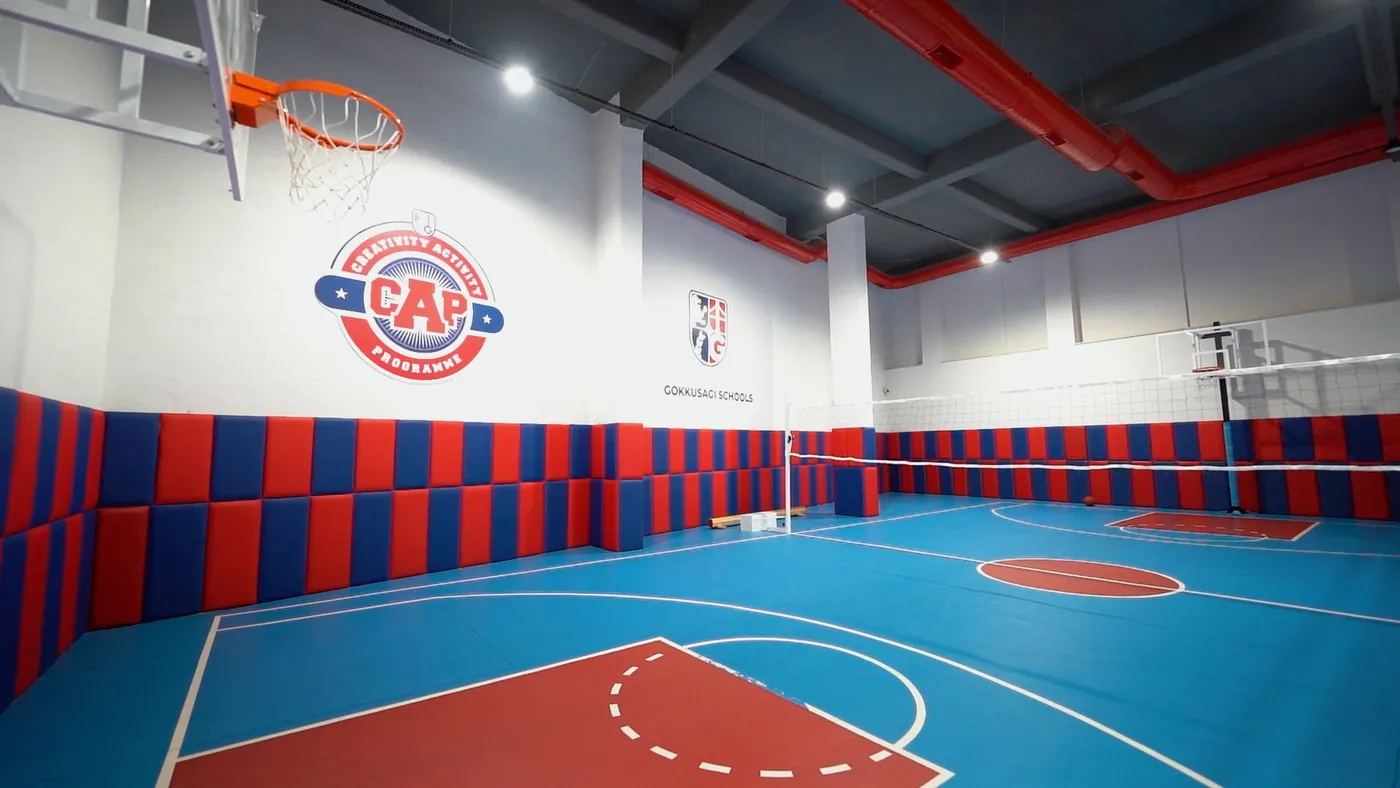
- Sport and everyday life: An indoor sports hall, a gymnastics hall, a life skills classroom, a library and a mind games room.
Getting around the city and school transport
Expat families in Antalya mostly live in Konyaaltı, Lara and the districts close to the city centre. Because Kızıltoprak sits in central Muratpaşa, it is within easy reach of many of these areas. Even so, when choosing a school we recommend looking not at the distance on the map but at the door-to-door time in morning traffic. Our school bus network covers central Muratpaşa and the surrounding neighbourhoods, and our admissions advisers will share the route that suits your home during your enrollment meeting. Meals are freshly prepared on campus every day.
Enrollment step by step
With the right school, enrolling a foreign student takes just a few steps. Here is the general picture:
- Introductory meeting: We start with a campus visit or an online meeting, where we talk about your family's expectations and your child's previous school experience and language level.
- Documents: Passports and residence permits are the core documents. The foreigner ID number starting with 99, issued with the residence permit, is the basis for official school registration. If your residence process is not complete yet, the meeting and pre-registration can still begin.
- Equivalency: For years completed abroad to be recognised in Turkey, an equivalency procedure (denklik) is carried out. Certified, translated report cards or transcripts from the previous school speed the process up.
- Placement assessment: We do a short getting-to-know-you assessment to see the student's academic level and their English and Turkish. The aim is not selection; it is to start in the right class with the right support plan.
- Adaptation plan: An individual adaptation and language support plan is prepared for the student's first weeks.
You will find more on documents and the equivalency process in our guide Enrolling Your Child in a School in Turkey. Because the rules can change from time to time, our admissions team will share the exact, up-to-date document list with you.
How does a child who speaks no Turkish get started?
This is the question expat families ask most often, and it is an understandable worry. For students who start without Turkish, support is planned during enrollment according to the student's level. Thanks to the part of the curriculum taught in English, students get used to the language without falling behind academically. In our experience, children who are part of everyday classroom and playground life usually pick up conversational Turkish within a few months.
Communication matters for parents too. Our admissions team includes a Russian-speaking adviser, and communicating in English is no problem at all. We plan this together during enrollment so that you can follow school updates and parent meetings without a language barrier.
How to prepare your child before the move
Changing schools is a big step for a child, and even more so when it comes with a change of country. A few small preparations make the first weeks noticeably easier:
- Introduce the school in advance: Look through photos and videos of the campus together and, if possible, arrange an online introductory meeting before you move. An unknown place becomes one your child can picture.
- Start with a few Turkish words: A handful of phrases, such as greetings, saying thank you and "can you help me?", give a child confidence in the first days.
- Keep routines steady: Keeping sleep, meal and play times as close as possible to the old pattern makes the rest of the change easier to carry.
- Build a connection outside school: A sports club, an art workshop or music lessons give your child somewhere to make friends beyond school, which speeds up settling in.
- A short chat every day: In the first weeks, set aside a few minutes each day to talk about the school day, with open questions rather than a simple "how was school?".
In a new country, children often settle into school faster than their parents expect. What makes the difference is not leaving them on their own in the first weeks.
How does the school year work in Turkey?
For families coming from a different education system, knowing the calendar makes planning the move easier. In Turkey the school year starts in September and ends in June. It is divided into two terms, with a mid-year break of about two weeks between them, usually from late January to early February. There is also a one-week mid-term break in November and another in April. The exact dates are announced each year by the Ministry of National Education.
The calendar also works in a new student's favour: the start of each term and the return from each break are natural points for a new student to join a class.
Which paths are open after graduation?
Perhaps the biggest advantage of a private school with international programmes for expat families is that options stay open at graduation. Our students graduate with a Turkish high school diploma, which is the basis for applying to universities in Turkey. International students can also apply to Turkish universities through the places universities set aside for international students.
For students who are considering university abroad, the international certificates earned at the end of the Cambridge Upper Secondary programme are evidence of their academic level that is recognised around the world. University and career guidance is planned during the high school years according to the country and field the student is aiming for.
When should you apply?
Enrollment for the next school year opens in the spring and continues until places are filled. If your move to Antalya is already planned, meeting the school as early as possible gives you peace of mind, both for securing a place and for preparing your child. If you are moving mid-year, enrollment during the term is possible as long as there is space in the class; in that case it is important to discuss the adaptation plan in advance.
Questions to ask on a school visit
- Is this a school for foreign nationals only, or a private school with international programmes? Which diploma do students receive at graduation?
- What is the accreditation code of the international programme, and where can I verify it?
- How many students are in a class, and how are international students supported?
- What Turkish language support is offered, and for how long?
- In which languages can parents communicate with the school?
- Does the school bus serve the neighbourhood where we live?
- In Turkey, "international school" covers two different legal types of school; clarify which one you are looking at before you enroll.
- At a private school with international programmes, your child studies with Turkish classmates and routes to universities in Turkey and abroad stay open.
- Our Antalya campus is a Cambridge International School (TR450); our IB programmes are at our campuses in Istanbul and Ankara.
- Enrollment follows five steps: introductory meeting, documents, equivalency, placement assessment and an adaptation plan.
- You can communicate with our admissions team in English and Russian.
Come and see our campus
You can book an online appointment on our Antalya campus page, or fill in the information request form and our admissions team will call you. Our address: Kızıltoprak Mahallesi, 927. Sokak No:10, Muratpaşa, Antalya.
Frequently Asked Questions
Can a foreign student enroll in a Turkish private school in Antalya?
Yes. Foreign students can enroll in private schools under the Ministry of National Education. Official registration is made with the foreigner ID number issued with the residence permit, and an equivalency procedure is required for previous school years.
Is Gökkuşağı a school for foreign nationals only?
No. Gökkuşağı is a private school under the Ministry of National Education that offers international programmes; it is not in the legal category of international schools that admit only foreign nationals. Turkish and international students study in the same classes, graduate with a Turkish diploma and sit the international examinations of the Cambridge programmes.
Is the IB offered at the Antalya campus?
The international programme at our Antalya campus is Cambridge International (TR450). Gökkuşağı's IB programmes are offered at our three Istanbul campuses (Bahçelievler, Ataşehir and Bahçeşehir) and at our Ankara campus.
My child doesn't speak Turkish. How will they settle in?
Support for students who start without Turkish is planned according to their level. Thanks to the part of the curriculum taught in English, your child gets used to Turkish without falling behind academically, and most children pick up conversational Turkish within a few months.
When does the school year start in Turkey?
The school year starts in September and ends in June. There is a mid-year break of about two weeks between the two terms, plus a one-week break in November and another in April. The exact dates are announced each year by the Ministry of National Education.
In which languages can I talk to the admissions team?
As well as Turkish and English, our admissions team includes a Russian-speaking adviser.